

Full-Service Lawn Care: What It Includes and Costs
You're tired of juggling three different companies just to keep your yard looking decent: one for mowing, another for weed control, a third when the shrubs need trimming. That's the exact problem service lawn care solves. Instead of piecing together vendors and chasing schedules, you hire one crew that handles the whole property, from the weekly cut to the fertilization program to the fall cleanup.
So what does full-service lawn care actually include, and what should you expect to pay for it? For lawn care and landscaping in Columbia and the wider Midlands area, a full-service plan typically bundles mowing, edging, aeration, overseeding, and weed control treatments, often for somewhere between $150 and $400 a month depending on lot size and how much landscaping is involved. Pricing shifts based on turf condition, property size, and whether you add extras like holiday lighting or seasonal cleanups.
This article breaks down exactly what's included in a full-service package , how pricing typically works in South Carolina's climate, and what separates a real full-service provider from a company that just mows grass. By the end, you'll know what questions to ask before you sign a contract with anyone.
Why full-service lawn care matters for your property
Your lawn is one of the few home upgrades you have to maintain forever, not just install once. Consistent care protects that investment, and a single full-service provider handles the whole cycle, mowing, feeding, aerating, and treating for weeds, so nothing falls through the cracks between separate contractors. When you split those jobs among different companies, you become the project manager, chasing schedules and hoping everyone shows up on the same page. Full-service lawn care removes that burden by putting one team in charge of the entire outcome, not just one slice of it.
The hidden cost of juggling multiple vendors
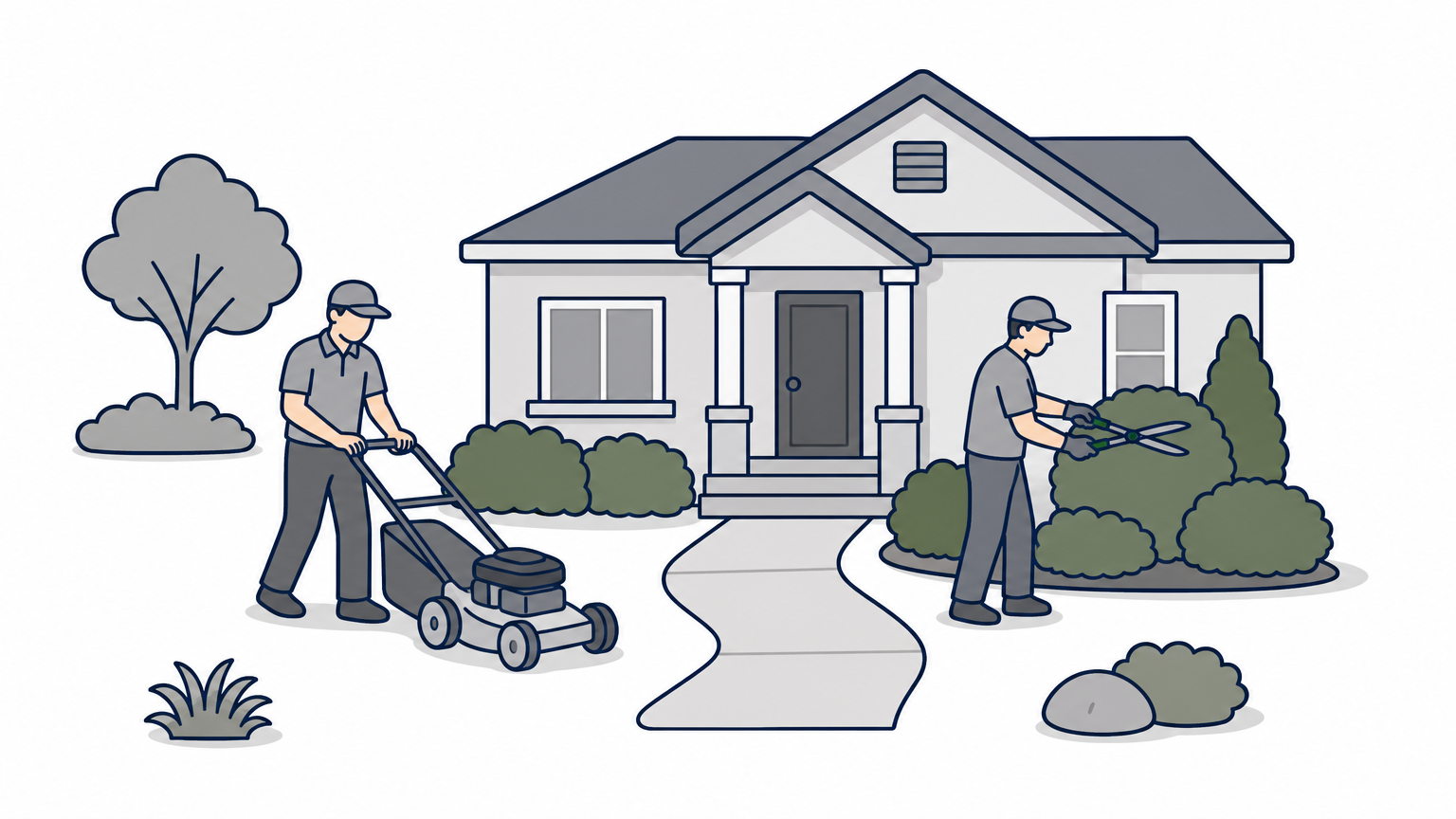
Managing three or four separate contractors sounds cheaper on paper, but it rarely works out that way in practice. Every company runs its own schedule, its own crew, and its own idea of what "done" looks like, and when something goes wrong, each vendor points to the other one. Miscommunication between vendors is the top reason lawns end up looking inconsistent, patchy in one section, overgrown in another, weeds thriving where the mowing crew and the treatment company never coordinated. A full-service model puts accountability in one place. If the lawn doesn't look right, you call one number, not four.
One team, one schedule, one point of accountability, that's what actually keeps a lawn looking consistent all year.
South Carolina's climate punishes inconsistent care
Columbia and the Midlands sit in a transition zone where warm-season grasses like Bermuda and centipede compete against cool-season weeds nearly year-round. Summers push past 95 degrees with heavy humidity, and mild winters mean weeds rarely die off completely the way they would farther north. Turf health here depends on timing : aeration before overseeding, pre-emergent weed control before crabgrass germinates, and fertilization schedules matched to the grass type's growing season. Miss one of those windows because your mowing company doesn't talk to your fertilization company, and you're fighting weeds or bare patches for months. A local full-service provider who works this climate every day builds the whole calendar around it, rather than guessing at timing from a national franchise playbook.
Curb appeal and property value add up over time
Landscaping isn't just cosmetic, it's one of the few home improvements that pays you back at resale. Realtors routinely point to well-kept lawns and beds as the first impression that shapes how a buyer judges the rest of the property before they even walk inside. According to the National Association of Realtors, curb appeal projects consistently rank among the highest-return improvements homeowners can make. Quarterly cleanups, mulch refreshes, and shrub trimming, the kind of work that gets skipped when you're only paying for mowing, are what keep a property looking cared for instead of merely cut.
Convenience for busy homeowners, HOAs, and property managers
Not everyone has time to coordinate five different service calls a month, and HOA boards managing common areas across multiple properties definitely don't have the bandwidth for it. Property managers juggling multiple sites need one point of contact who shows up on the same day every week, sends an invoice through a client portal, and fixes problems without a change order or a runaround. Sparta Lawn Care's commercial grounds maintenance and residential lawn care plans are built around that same-crew, same-schedule model, so whoever shows up at your property already knows its quirks: the low spot that floods, the flower bed by the mailbox, the fence line that always needs extra trimming. That familiarity is what separates a real full-service relationship from a rotating cast of subcontractors.
How to choose the right full-service lawn care company
Finding a service lawn care provider isn't hard, dozens of trucks with magnetic signs drive through Columbia every week. Finding one that actually delivers on the full-service promise is harder, and the difference shows up six months later when the weeds come back or the crew stops showing up on schedule. Before you sign anything, run the company through a short checklist that separates a real operation from a side hustle with a mower.
Verify licensing, insurance, and local experience
Start with the basics: is the company licensed and insured, and has it actually worked in your climate zone? Licensing and insurance protect you if something goes wrong on your property, a broken sprinkler line, a damaged fence, an injured worker. Local experience matters just as much, because a crew that's only worked lawns in Charlotte or Atlanta won't know when centipede grass in Elgin needs its first feeding or when crabgrass germinates in a Columbia summer. Ask how long the company has served your specific area, not just the region.
Ask who's actually showing up to mow
Crew consistency is the detail most homeowners skip and later regret. Consistent crews learn your property, the low spot that stays wet, the bed that needs extra edging, the gate that has to be latched behind them. A rotating cast of subcontractors means re-explaining your yard every few weeks, and mistakes multiply when nobody's accountable for the same lawn twice in a row. Ask directly: will the same crew service my property every visit, or does that change week to week?
If you can't get a straight answer about who's mowing your lawn next week, that's your answer about the company.
Compare what's included, not just the monthly price
Two quotes that look similar on paper can cover completely different work. Before comparing numbers, get a written list of exactly what's bundled into the plan:
- Mowing frequency and edging
- Fertilization and weed control treatment schedule
- Aeration and overseeding, and how often
- Cleanup, mulching, and shrub trimming
- Response time for service issues
Requesting that list in writing protects you from a low quote that turns into upsells for every extra service once you're already under contract.
Look for a real satisfaction guarantee
Guarantees separate confident companies from ones hoping you don't notice a missed spot. Sparta Lawn Care backs every job with the Sparta Family Guarantee, fixing any service issue at no extra cost until you're satisfied, which is the kind of policy worth asking every provider to match. Veteran ownership and 20-plus years in the Midlands also tell you something about staying power; a company that's survived two decades of South Carolina summers has earned its reputation the hard way, not through a marketing budget. Verifying these details before you sign takes twenty minutes and saves you from a season of headaches.
What's included in a full-service lawn care plan
A real full-service plan isn't just a fancy name for mowing on a schedule. It's a bundle of services designed to work together across the whole growing season, each one timed to support the others. Full-service lawn care typically covers four categories: routine turf maintenance, seasonal treatments, landscaping upkeep, and optional add-ons that round out the property. Knowing what belongs in each category helps you spot a thin package before you sign anything.
Core turf maintenance
Mowing and edging form the baseline, but the details matter more than most homeowners realize. Mowing height and frequency should shift with the season, longer in summer heat to protect the roots, tighter in early spring to encourage new growth. Edging along driveways, walkways, and beds keeps the property looking finished instead of just cut. A provider that mows on the same day every week, with the same crew, is doing more for your lawn's health than one that shows up whenever a truck is free.
Seasonal treatments and soil health
This is where a lot of "lawn care" companies quietly stop, and where a true full-service plan keeps going. Fertilization and weed control treatments run on a schedule matched to your grass type, pre-emergent applications before crabgrass germinates, targeted feeding during the active growing months. Core aeration and overseeding address compacted soil and thin patches, usually once a year for warm-season lawns in the Midlands. Skip either service and you'll see it within a season: bare spots that never fill in, weeds that crowd out healthy turf.
A lawn that gets mowed but never fed or aerated is just being maintained at the same level of decline, week after week.
Landscaping and property upkeep
Beyond the grass itself, a full package covers the beds, shrubs, and cleanup work that keep a property looking finished year-round. Residential landscaping services typically include shrub trimming, mulch refreshes, and seasonal cleanups that clear leaves and debris before they smother the turf underneath. Property upkeep like this is often the first thing cut when homeowners try to save money, and it's also the first thing a neighbor or a home buyer notices.
Optional add-ons that round out the package
Some services aren't part of the core plan but fit naturally alongside it, especially for homeowners who want one company handling everything on the property calendar. Here's how those add-ons typically break down:
| Add-on service | Typical timing | Who uses it |
|---|---|---|
| Holiday and Christmas light installation | November through January | Residential and commercial properties |
| Dumpster trailer rental | Anytime, project-based | Cleanups, renovations, landscaping projects |
| Extra cleanups | Spring and fall | Properties with heavy leaf or storm debris |
Adding these to an existing lawn care contract usually costs less than hiring a separate seasonal vendor, since the crew is already on-site and familiar with the property.
Full-service lawn care vs. basic lawn mowing
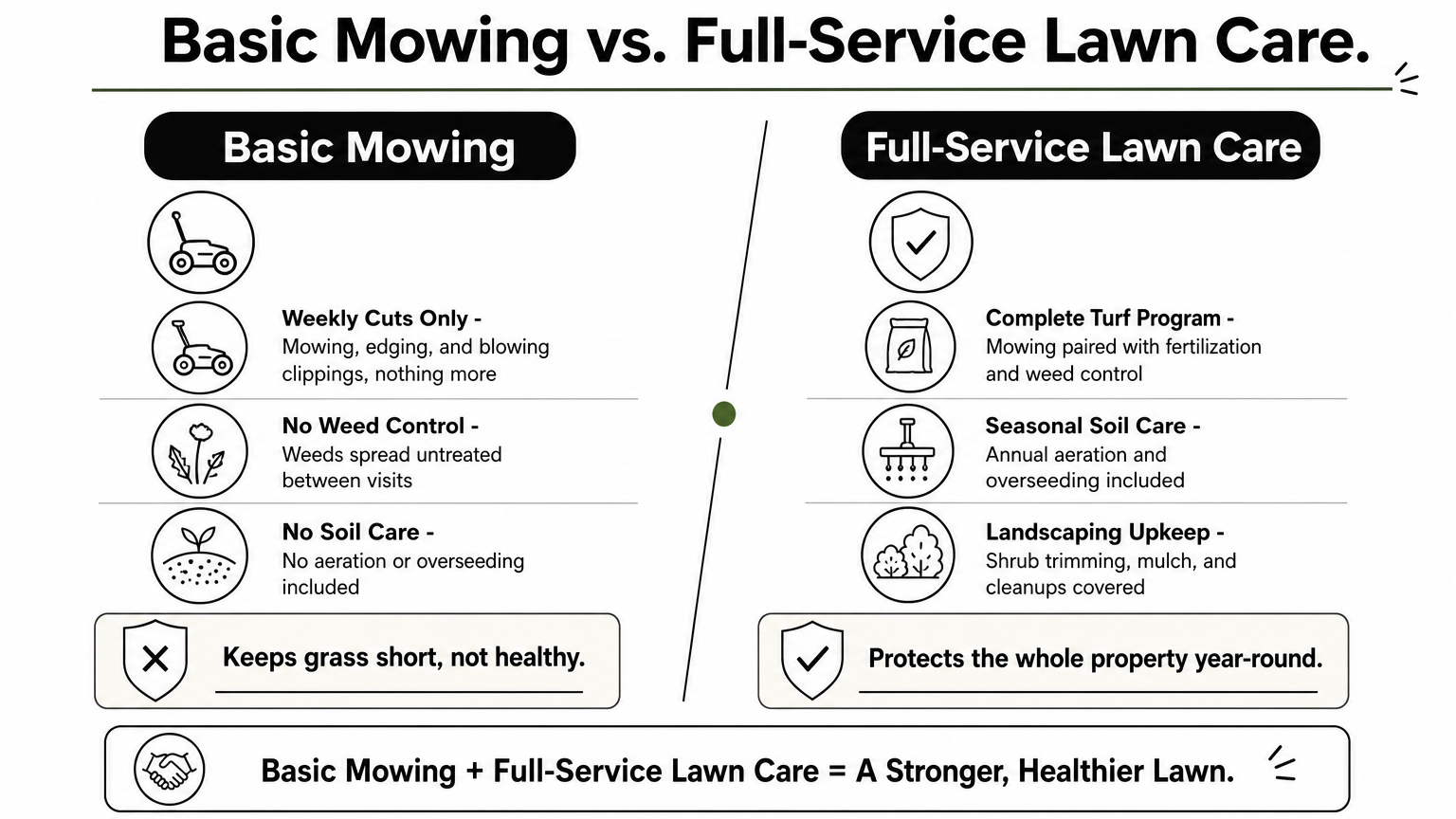
Most homeowners start with a mowing service and assume that's the whole job. It isn't. Basic lawn mowing covers exactly what the name says: cutting the grass, maybe a quick edge along the driveway, and nothing else. Full-service lawn care wraps that same mowing visit into a bigger plan that also feeds the soil, controls weeds, and keeps beds and shrubs looking finished. The gap between the two only shows up months later, when the mowed lawn starts thinning out or the weeds a mowing crew never treats start taking over.
What a mowing-only contract actually covers
A typical mowing contract includes weekly or biweekly cuts, string trimming around obstacles, and blowing off clippings from hard surfaces. That's it. Weed control , fertilization, aeration, and cleanup work sit outside the scope entirely, which means you're either doing them yourself or hiring a second and third company to fill the gaps. Some mowing companies will upsell these services one at a time, but you're paying separate invoices, coordinating separate schedules, and hoping the timing lines up.
Where the two approaches diverge
Side by side, the difference between a mowing-only plan and a full-service package becomes obvious:
| Service | Basic mowing | Full-service lawn care |
|---|---|---|
| Mowing and edging | Yes | Yes |
| Fertilization program | No | Yes |
| Weed control treatments | No | Yes |
| Aeration and overseeding | No | Yes |
| Shrub trimming and mulch | No | Yes |
| Seasonal cleanups | No | Yes |
| Single point of contact | Rarely | Yes |
A mowed lawn isn't the same as a healthy lawn, and the difference is everything a mowing-only contract skips.
Why the cheaper option often costs more
Saving money on a mowing-only plan looks smart until you add up what you're paying elsewhere. Weed control alone , bought separately from a treatment company, often costs close to what a full-service upgrade would run, and that's before you factor in aeration, overseeding, and cleanup work you're either doing yourself or hiring out again. Homeowners who stick with mowing-only service for a few years usually end up calling a full-service company anyway, except now they're paying to fix compacted soil, thick weed pressure, and thin turf that a coordinated program would have prevented.
When basic mowing is still the right call
Basic mowing isn't wrong for every property. Renters, vacant lots, and homeowners planning to sell within a year sometimes don't need the long-term investment a full program requires. Landlords managing a rental where curb appeal matters less than keeping the grass under code often stick with mowing-only service on purpose. But for anyone planning to stay in a home, or any commercial property where the grounds reflect on the business, a full-service package almost always pays for itself in turf health and time saved. Sparta Lawn Care's residential lawn maintenance plans are built for exactly that longer-term relationship, not a one-off mowing job.
How much does full-service lawn care cost
Expect a full-service lawn care plan in the Columbia and Midlands area to run somewhere between $150 and $400 a month, with most single-family homes landing in the $175 to $275 range. That range covers mowing, edging, fertilization, weed control, and seasonal aeration bundled into one predictable bill. Larger lots, heavy landscaping, or properties needing extra cleanup push toward the top of that range, while smaller yards with simple turf sit closer to the bottom. Monthly pricing beats paying for each service separately because you're not stacking a mowing invoice on top of a treatment invoice on top of a cleanup fee.
What drives the price up or down
Quotes vary for real reasons, not just because one company charges more than another. Here's what actually moves the number:
| Factor | Effect on price |
|---|---|
| Lot size | Larger lots mean more mowing and treatment time |
| Turf condition | Weed-heavy or compacted soil needs extra treatments upfront |
| Grass type | Bermuda, centipede, and zoysia have different feeding schedules |
| Landscaping extent | More beds and shrubs add trimming and mulch costs |
| Add-ons | Holiday lighting, extra cleanups, and dumpster rentals cost extra |
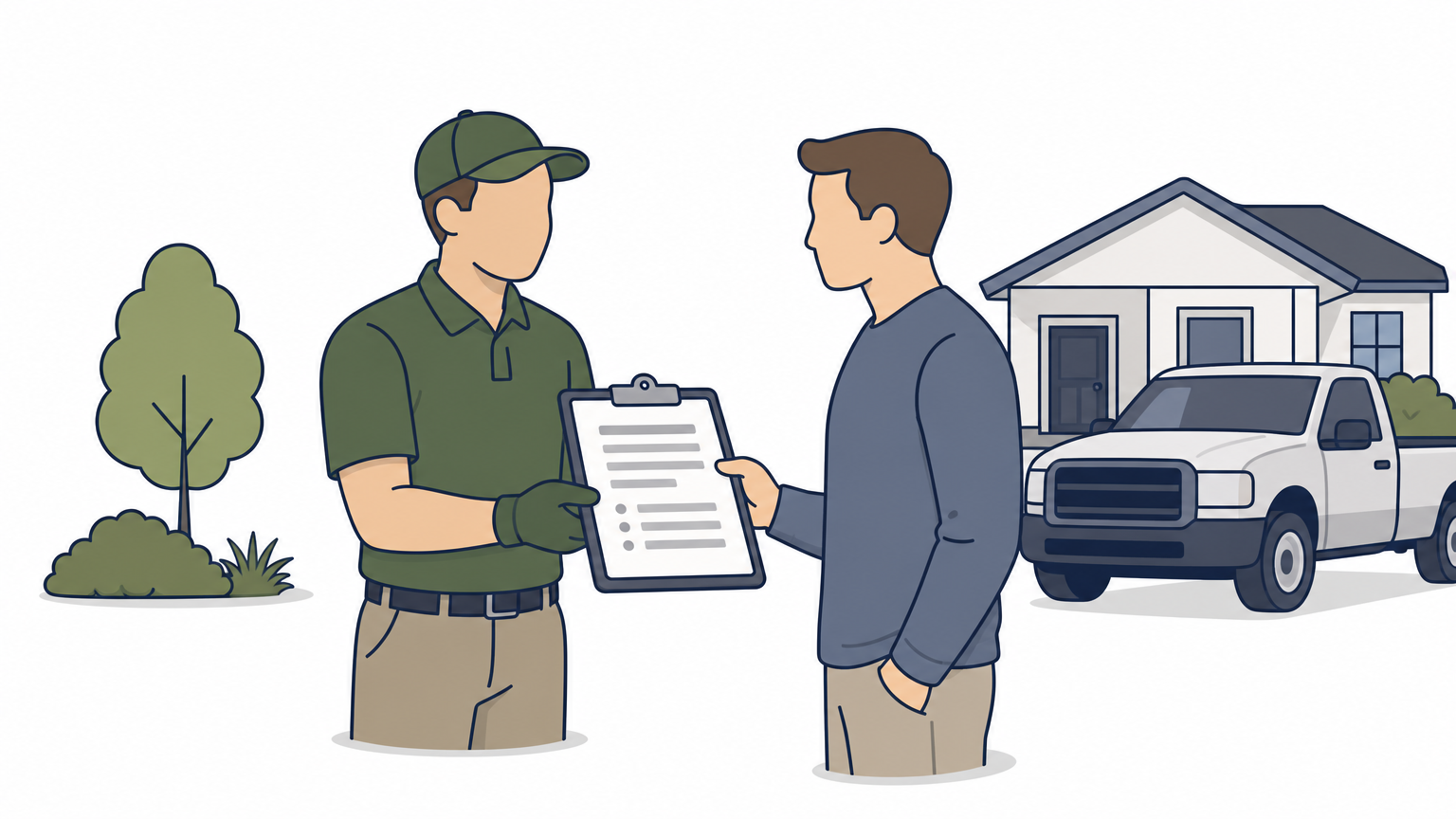
Getting a quote without a site visit almost always underestimates the real cost, since turf condition and lot layout only show up in person.
The lowest quote rarely stays the lowest once turf condition and add-ons get factored in.
Typical monthly cost breakdown
Breaking the bundle into pieces helps you see where the money actually goes:
- Mowing and edging : $40 to $80 per visit, or built into a flat monthly rate
- Fertilization and weed control : $50 to $75 per treatment, applied 5 to 7 times a year
- Aeration and overseeding : $150 to $300 annually, usually a fall service
- Landscaping upkeep : $75 to $200 per visit for shrub and tree trimming, mulch, and cleanups
Homeowners who bundle these into one monthly plan generally pay less overall than booking each service separately, since the crew is already on-site and there's no separate trip charge for every visit.
Commercial and HOA pricing differs
Property size and complexity change the math for businesses and HOA common areas. Commercial pricing typically runs on a custom quote rather than a flat residential rate, since parking lot islands, retention ponds, and multiple building fronts all add mowing and trimming time that a single-family yard never sees. Sparta Lawn Care's lawn care plans for business and HOA properties are priced after a walkthrough of the site, not a phone estimate, because a fair quote depends on seeing the actual grounds. If you're comparing bids for an HOA or business property, insist on an in-person walkthrough before signing anything, phone quotes for commercial sites almost never hold up once the crew arrives.
A season-by-season guide to full-service lawn care
Columbia's climate doesn't give turf a real dormant season, which means a full-service lawn care calendar has to run all twelve months instead of pausing every winter. Grass types like Bermuda, centipede, and zoysia each wake up and slow down on their own timeline, and the treatments that work in April will do nothing in July. Understanding what should happen each season helps you judge whether a provider is actually running a program or just showing up whenever the grass looks long.
Spring: wake-up and weed prevention
Spring is when the whole year gets set up or wasted. Pre-emergent weed control needs to go down before soil temperatures trigger crabgrass germination, usually by mid-March in the Midlands, and missing that window means fighting weeds all summer instead of preventing them. Mowing height should come down gradually as warm-season grasses green up, and the first fertilization push feeds roots coming out of winter dormancy.
Spring treatments either prevent a summer of weeds or guarantee one, there's no middle option once the window closes.
Summer: heat stress and mowing discipline
Heat and humidity turn South Carolina summers into a stress test for turf, and this is where mowing frequency and height matter more than any single treatment. Mowing frequency should stay consistent, usually weekly, with blade height raised slightly to shade the soil and protect roots from scorching. Watering deeply but less often beats daily light watering, and a good crew watches for signs of drought stress or fungus before either one spreads across the yard.
Fall: aeration, overseeding, and cleanup
Fall is arguably the most important season for long-term turf health, even though it gets the least attention from homeowners. Aeration and overseeding relieve compacted soil and fill in thin patches before winter, giving roots room to grow while the weather cools. Leaf cleanup and removal matters just as much, since a thick layer of leaves left on the lawn smothers grass and invites fungus underneath. This is also when a lot of properties schedule mulch and rock installation and shrub trimming to close out the growing season looking clean.
Winter: dormant care and holiday prep
Winter in the Midlands rarely means the lawn goes fully dormant, so light maintenance still matters even when growth slows down. Winter maintenance typically includes occasional mowing on warmer weeks, spot weed treatments since cool-season weeds keep growing, and pruning dormant shrubs before spring growth resumes. Winter is also when a lot of homeowners add Christmas light installation to their existing service, since the crew is already familiar with the property and can hang lights without a separate contractor walking the yard.
| Season | Key tasks |
|---|---|
| Spring | Pre-emergent weed control, first fertilization, mowing height adjustment |
| Summer | Weekly mowing, deep watering, fungus and drought monitoring |
| Fall | Aeration, overseeding, leaf cleanup, mulch refresh |
| Winter | Spot weed treatment, dormant pruning, holiday lighting |
Finding a lawn care partner you can trust
A healthy lawn in the Midlands comes down to timing, consistency, and one team that actually coordinates the whole calendar instead of showing up whenever the grass gets long. Full-service lawn care bundles mowing, fertilization, weed control, aeration, and landscaping upkeep into a single relationship, so you're not chasing three invoices or guessing whether anyone treated for crabgrass before it germinated. Whether you're a homeowner tired of managing vendors or an HOA board that needs one reliable point of contact, the value shows up in fewer surprises and a property that actually looks cared for year-round.
Sparta Lawn Care has run that same-crew, same-schedule model across Columbia, Blythewood, and Elgin for over 20 years, backed by the Sparta Family Guarantee on every job. If you're ready to stop juggling contractors, request a free lawn care estimate and see what a real full-service plan looks like on your property.