
Organic Lawn Care Service: 6 Options for Columbia Homeowners
The best organic lawn care service for a Columbia lawn is the one that fits what your grass needs and names every product it will use. If you want no pesticides of any kind, start with a local crew for mowing, aeration and overseeding, then add soil testing and organic fertilizer. If you want organic-only inputs, hire a specialist. If you want one vendor and fewer inputs, a full-service company with a low-chemical plan fits better.
The problem is that "organic" is not a regulated label for lawn services. One company means certified-organic products only. Another means "organic-based" with a synthetic spot treatment. A third means no products at all. Two quotes can look alike and describe very different programs.
Below are six service options built for the warm-season lawns of the Midlands, such as Bermuda, Zoysia and Centipede. Each one covers how it works, who it suits and what to ask. A final section shows how to compare quotes, prices and reviews. We are Sparta Lawn Care, a veteran-owned Columbia company, so we place ourselves only where we honestly fit.
1. Local crew for mowing, aeration and overseeding
How it works
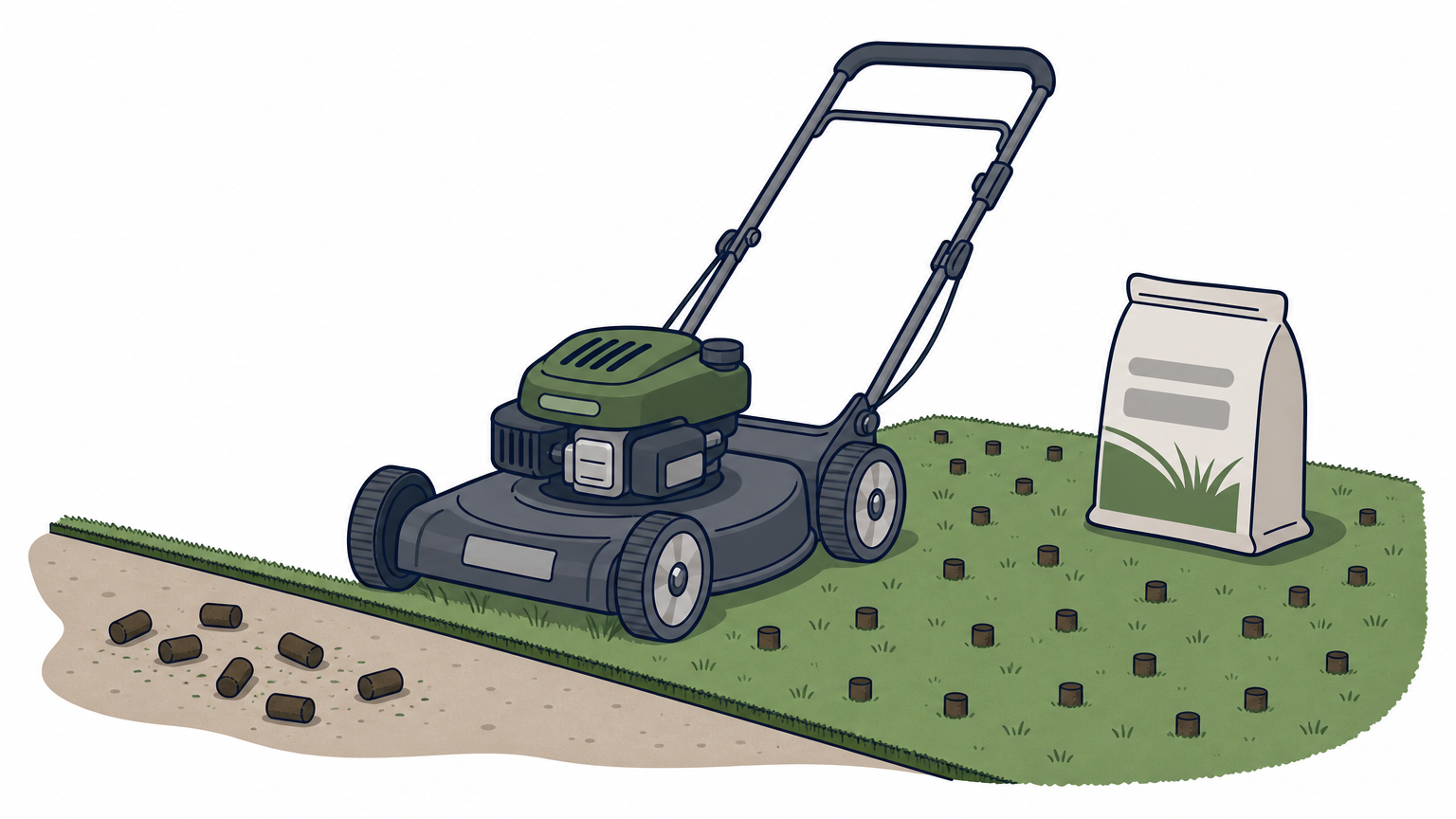
The most dependable pesticide-free service is plain, well-timed maintenance. Mowing at the right height, core or liquid aeration, and fall overseeding use no pesticides, and they do more for turf than most products. Mowing keeps grass dense. Aeration relieves compaction so roots reach air, water and nutrients. Overseeding fills thin or bare patches before weeds move in. Every organic lawn care service in the Midlands builds on these practices.
Thick turf is the cheapest weed control you can buy.
At Sparta Lawn Care, the same familiar crew visits each property, so they learn where your lawn stays wet, where it compacts and where it thins. We have done this work for more than 20 years. The Sparta Family Guarantee means we fix any service issue at no additional cost until you are satisfied.
Who it suits and what to ask
This option suits homeowners in Columbia, Chapin, Blythewood and Irmo with thin turf, compacted soil or heavy foot traffic . It also suits anyone who wants a pesticide-free baseline before adding products. It is not a complete organic program, because it does not feed the lawn or control weeds by itself. Pricing depends on lot size and visit frequency, so ask for a written quote. Questions to bring:
- What mowing height do you use for my grass type?
- Do you mulch clippings back into the lawn or bag them?
- Do you offer core aeration, liquid aeration, or both?
- Is overseeding scheduled for fall?
2. Soil testing with organic fertilization
How it works
A soil test turns guessing into a plan. Samples from several spots go to a lab, and you get back pH and nutrient levels with recommendations. Clemson Extension offers soil testing to South Carolina homeowners. A good organic lawn care service orders a test before it applies anything, so lime and nutrients go on only where the numbers call for them.
Organic fertilizers use ingredients such as compost, alfalfa meal, feather meal, cottonseed meal and kelp . They release nutrients slowly and feed soil life as well as grass. For warm-season turf, feeding starts after the lawn has fully greened up in spring and stays within the growing season. It does not run into fall dormancy.
Test before you feed, because the right organic product on the wrong soil is still a wasted application.
Who it suits and what to ask
This option suits owners who have never tested their soil, or whose lawns show yellowing or patchy growth despite regular feeding. Organic materials usually cost more than synthetic ones, and some need more frequent applications, so expect a higher cost per application . Ask these questions:
- Will you test my soil before the first application?
- Which ingredients are in the fertilizer you will use?
- How much nitrogen will my lawn get per 1,000 square feet over a year?
3. Organic weed control without blanket spraying
How it works

Organic weed control works in two layers, prevention first and treatment second. Pre-emergent products form a barrier that stops seeds from sprouting, so timing decides the result. Crabgrass prevention goes down in late winter to early spring, before soil warms past roughly 55 degrees F. Winter weeds need their own window in early fall. The organic pre-emergent is corn gluten meal, and its results are modest.
Weeds that already show get spot treatment . Organic post-emergents include horticultural vinegar, soap-based products and iron-based herbicides. Most burn any leaf they touch, grass included, so spot spraying and hand pulling beat blanket applications on a Bermuda or Centipede lawn. Organic also does not mean harmless. Read every label, and see the EPA's explanation of minimum-risk pesticides.
Organic herbicides are still herbicides, so treat the weed and not the whole lawn.
Who it suits and what to ask
This option suits lawns where the turf is mostly healthy and weeds show up in patches. If weeds cover large areas, the cause is usually compaction, wet soil or mowing too low, and no product will hold until that is fixed . Organic contact herbicides rarely kill roots in one pass, so budget for repeat visits . Ask these questions:
- Which product will you use, and what is its active ingredient?
- Will you spot treat or broadcast?
- When does the pre-emergent go down?
- Is a return visit included if weeds survive?
4. Organic grub and pest control
How it works
Healthy lawns rarely need insecticide, so the first job is identifying the pest before treating it . White grubs get blamed for many brown patches that come from drought, disease or heat stress. A technician should lift a square-foot flap of turf, count the grubs and treat only when the count is high.
When treatment is warranted, organic options include beneficial nematodes and spinosad-based products for grubs and caterpillars. Botanical or oil-based products handle fleas, ticks and mosquitoes. Nematodes are living organisms, so they need moist soil and quick use. Habitat work helps too. Mowing on schedule and trimming tall grass along edges removes places where ticks wait.
Confirm the pest first, because most brown patches are not caused by insects.
Who it suits and what to ask
This option suits families and pet owners who use the lawn daily and owners with confirmed damage. Pest work is usually seasonal and billed per treatment, so you pay when there is a real problem. Ask these questions:
- How do you confirm the pest before you treat?
- What product will you apply, and how long before pets can return to the lawn?
- Do you charge for the diagnosis visit?
5. Specialist organic lawn care company
How it works
A specialist builds the whole program around organic inputs: soil testing, organic fertilizer, weed prevention, aeration and overseeding on a set schedule. The advantage is depth. Their technicians know the product line and what the first season looks like, when organic lawns often green up more slowly than synthetic ones.
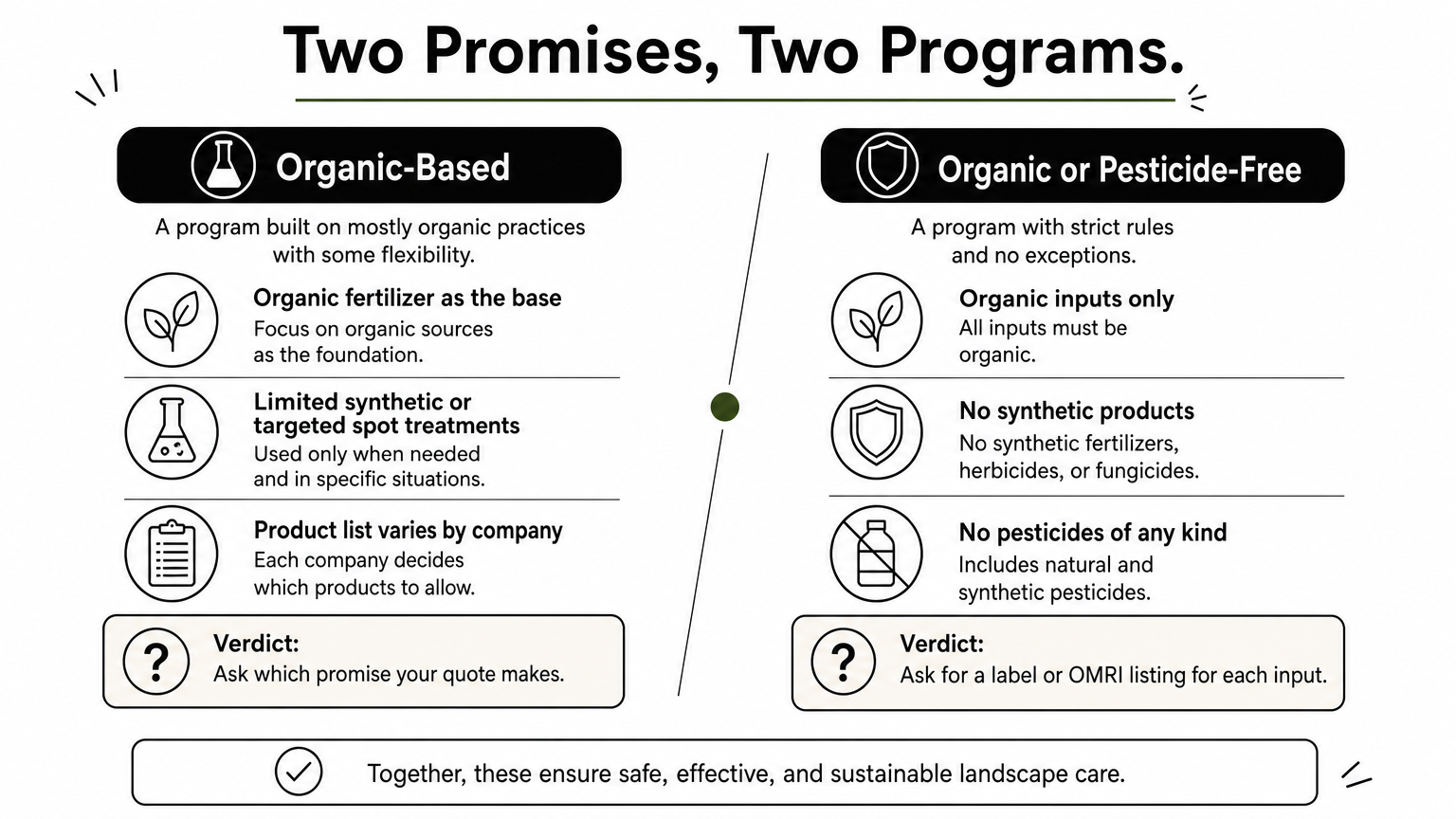
The catch is vocabulary. "Organic-based" usually means organic fertilizers with limited synthetic or targeted treatments, while "organic" or "pesticide-free" should mean none. Check that a company serves your ZIP code before you request a visit, because service areas in the Midlands vary by town.
"Organic-based" and "organic" are not the same promise, so ask which one is in your quote.
Who it suits and what to ask
This option suits owners who want organic-only inputs and accept a higher annual cost and slower first-year results . It fits lawns where you want one organic program from start to finish and have the budget for it. Ask these questions:
- Are synthetic products ever used on my lawn?
- Can I see product labels or an OMRI listing for each input?
- What does year one look like, visit by visit?
- What happens if weeds return between visits?
6. Full-service company with a low-chemical plan
How it works
A full-service lawn care company fits owners who want fewer inputs, one vendor and predictable scheduling. It will not give you an organic-only guarantee. It does put residential lawn care and maintenance, fertilization, weed control, aeration and overseeding under one crew and one invoice. That keeps the whole lawn on a single plan.
Sparta Lawn Care works this way for homes, businesses and HOA common areas. Our fertilization and weed control program uses granular formulas that release slowly for steady feeding, and each application is chosen by grass type, soil health and season. That is not a certified-organic program. If organic-only inputs matter to you, ask for the product list before you sign , from us or anyone else.
One crew that knows your property beats three vendors who each see a third of it.
Who it suits and what to ask
This option suits HOA boards, commercial property managers and busy homeowners in Columbia, Blythewood, Elgin and Lexington who want reliable grounds care and fewer inputs, not zero. Bundled service is usually priced per property, so request a written quote. Questions to bring:
- Which products are in my program, and can you share the labels?
- Can the plan limit applications to spot treatment?
- Are you licensed and insured?
- What is your policy if I am unhappy with a visit?
How to compare quotes, prices and reviews
The six options side by side
Use this table to place each quote you receive. "Pesticide-free" applies only where no pesticide of any kind is used.
| Option | Pesticide-free? | Best for |
|---|---|---|
| 1. Mowing, aeration, overseeding | Yes | Thin or compacted turf |
| 2. Soil test and organic fertilizer | Yes | First-time baseline |
| 3. Organic weed control | No, organic-approved herbicides | Patchy weeds |
| 4. Organic grub and pest control | No, organic-approved products | Confirmed insect damage |
| 5. Specialist organic company | Ask, varies by company | Organic-only inputs |
| 6. Full-service, low-chemical plan | Ask for the product list | One vendor, HOAs, businesses |
What drives the price
Prices depend on lot size, grass type, soil condition and visit count , so no honest number fits every yard. First-year programs often cost more because aeration, overseeding and soil correction come up front. Organic materials also cost more than synthetic ones and may need re-application.
To compare fairly, request the same scope from each company in writing. Include the services, product names, number of visits and annual total. A cheap quote that leaves out aeration or soil testing is not actually cheaper.
Compare scope before price, because two quotes only match when they list the same services.
Checking reviews and credentials
Read recent Google reviews for patterns, not star averages. Look for mentions of the same crew showing up , quick responses and how the company handled a complaint. Ask for two local references with the same grass type as yours.
Then verify the paperwork before you accept a quote:
- Proof of license and a certificate of insurance
- A South Carolina pesticide applicator license number if any herbicide or insecticide is planned
- A written product list for every application
- The guarantee or fix-it policy in writing
Pick the service that fits your lawn
A good organic lawn care service starts with the soil and the maintenance basics, then adds products only where the lawn needs them. Match your goal to the right option. Choose a local crew for pesticide-free basics, a specialist for organic-only inputs, or a full-service company for one vendor and fewer inputs. Whoever you hire, get the product list and scope in writing.
If your Midlands lawn needs mowing, aeration, overseeding or a fertilization plan, request a quote for residential lawn care and maintenance from Sparta Lawn Care. You can also call or text (803) 261-1485 to talk through your grass type and which products you want or want to avoid.